
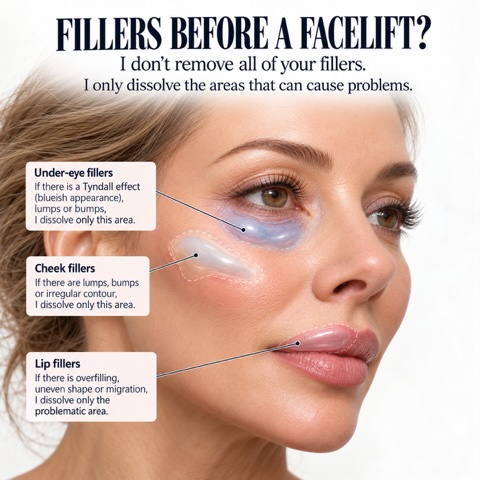
“You need to dissolve all your filler before a facelift.”
I disagree.
One of the most common questions I hear from patients who have had dermal filler over the years is:
“Do I have to dissolve everything before facelift surgery?”
The answer is: not necessarily.
I do not automatically dissolve every area of filler simply because someone is considering a facelift. Instead, I evaluate the filler based on its location, appearance and relationship to the patient’s surgical plan.
Why You May Not Need to Dissolve All Your Filler
Dermal filler can remain smooth, natural-looking, and appropriately positioned for years. If it is not creating irregularities or interfering with surgery, there may be no reason to remove it. The notion that all fillers will migrate and cause heaviness and deformities is not necessarily true for everyone.
My approach is individualized. I focus on preserving what looks good, correcting what does not, and creating a balanced result that fits your facial anatomy.
Under-Eye Filler
Under-eye filler can sometimes create visible lumps, puffiness, or a bluish discoloration known as the Tyndall effect. If these concerns are present, I may recommend selectively dissolving filler in the tear trough area before or as part of a broader treatment plan.
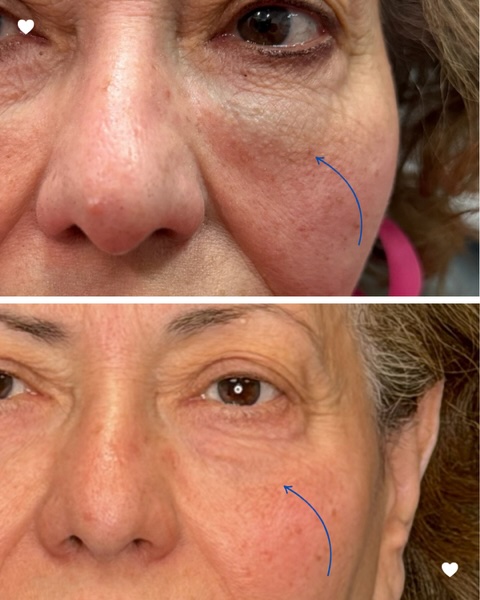
However, not every patient with under-eye filler needs to have it dissolved. The decision depends on the appearance of the area and the overall surgical plan.
Cheek Filler
Cheek filler may not need to be removed if it is smooth, appropriately placed, and not interfering with facelift surgery. In some patients, existing cheek volume can complement the surgical result.
The goal is not to erase every previous treatment. The goal is to determine what is helping and what may be contributing to heaviness, irregularity, or an unnatural appearance.
Lip Filler
Lip filler may be addressed if there is overfilling, migration, asymmetry, or visible irregularity. When appropriate, selective dissolving can help restore a more balanced appearance.
Again, this is not an automatic step for every facelift patient. It depends on the condition of the filler and the patient’s aesthetic goals.
The Key Word Is Selectively
I do not believe every patient needs to “start from zero” before facelift surgery.
A facelift is designed to reposition and restore the deeper tissues of the face. It is not simply about removing everything that has been done previously.
During your consultation, I evaluate:
- Where the filler is located
- Whether it is still visible or palpable
- Whether it has migrated
- Whether it contributes to puffiness or heaviness
- Whether it interferes with the surgical plan
- Whether dissolving it would improve the final result
Can You Have a Facelift If You Have Had Filler?
Yes, many patients who have had dermal filler can still be excellent candidates for facelift surgery. Having filler does not automatically disqualify you from surgery, and it does not always mean that all filler must be dissolved beforehand.
The most important step is choosing a facial plastic surgeon who understands how injectable treatments and facial surgery work together.
A facelift addresses lax skin and deeper tissue descent. Filler may address volume loss, contour, or specific areas of the face. In some cases, these treatments can be complementary. In other cases, certain filler may need to be dissolved to improve the surgical result.
My Approach to Facelift Surgery in Orange County
My goal is to create a natural, balanced result—not a face that looks overfilled or overcorrected.
This may include deciding whether to:
- Keep existing filler
- Dissolve filler in selected areas
- Wait for filler to naturally diminish
- Combine facelift surgery with other procedures
- Reassess volume after healing
Every face is different, and every treatment plan should be customized.
Frequently Asked Questions
Do I have to dissolve all filler before a facelift?
No. Some patients may benefit from selective dissolving, while others may not need to dissolve any filler. The decision depends on the filler’s location, appearance, and effect on the surgical plan.
Can filler interfere with facelift surgery?
In some cases, filler can contribute to swelling, heaviness, irregularities, or tissue changes that may affect planning. In other cases, it may not interfere at all.
Should I dissolve under-eye filler before a facelift?
Not always. Under-eye filler may be dissolved if it causes puffiness, lumps, bumps, or bluish discoloration. Your surgeon should evaluate the area before making a recommendation.
Can I keep cheek filler before facelift surgery?
Possibly. If cheek filler is smooth, appropriately positioned, and not interfering with surgery, it may be reasonable to keep it.
How long should I wait after dissolving filler before facelift surgery?
The timing varies depending on the area treated, the type and amount of filler, and how your tissues respond. Your surgeon will recommend an appropriate timeline based on your individual treatment plan. As a general role, If you are planning to have a facelift within the next 1 year, try to avoid fillers.
Considering a Facelift in Orange County?
If you have existing filler and are considering facelift surgery, Dr. Bolourian can evaluate your filler and determine whether any areas should be dissolved as part of your personalized surgical plan. Contact Orange County Surgical Specialists to schedule a consultation.